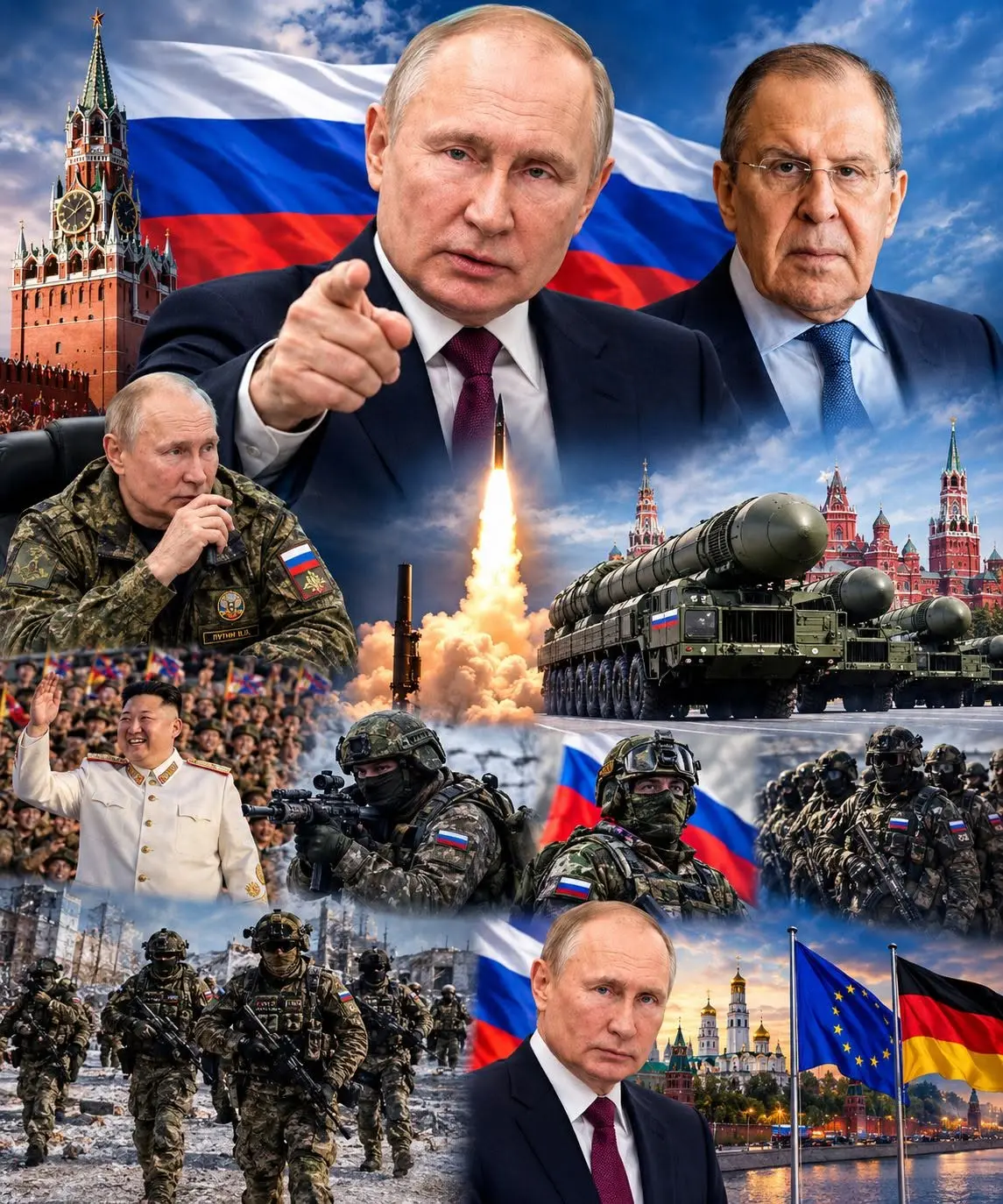
🇷🇺⚡️🇩🇪 LAVROV WARNS GERMANY: “DON’T PUSH RUSSIA TOWARD A REAL WAR”
Russian Foreign Minister Sergei Lavrov has dramatically escalated Moscow’s rhetoric toward Germany, accusing Berlin of moving dangerously close to direct confrontation with Russia as the diplomatic fallout from the Leipzig/Halle Airport drone incident intensifies.
🚨 Germany says Russia was responsible for the attempted drone attack. Moscow categorically rejects the accusation, describing Berlin’s case as baseless and politically motivated. What began as a security investigation has now developed into one of the most serious confrontations between Germany and Russia in recent years.
And Lavrov’s latest language shows just how dangerous the political temperature has become.
Speaking about Western accusations surrounding the Leipzig incident, Lavrov characterized them as, “by and large, the start of a real war.”
He then went further, attacking German Chancellor Friedrich Merz over his ambition to strengthen Germany’s military position in Europe and claiming that Merz was, in effect, declaring war on Russia.
Those are extraordinary words between two major European powers.
But they come after an extraordinary incident.
The crisis traces back to August 4, when an explosives-laden drone was discovered at Leipzig/Halle Airport near a Ukrainian Antonov cargo aircraft. The device failed to explode, avoiding what German authorities feared could have become a catastrophic attack.
After weeks of investigation, the German government announced on September 1 that it had concluded Russia was responsible.
Berlin said its attribution was based on multiple strands of evidence, including police and intelligence findings. German officials have publicly characterized the incident as part of a broader pattern of hybrid activity directed against Europe.
Russia denies everything.
Moscow has accused Germany of manufacturing or manipulating evidence and says Berlin is deliberately using the incident to justify an increasingly hostile policy toward Russia.
That disagreement would already represent a major diplomatic crisis.
But Germany did not stop at accusations.
Berlin announced retaliatory measures, including closing a Russian consulate and taking action against a Russian cultural center. Russia subsequently announced measures targeting German cultural institutions in retaliation.
The confrontation has therefore moved beyond rhetoric.
Each side is now imposing tangible consequences on the other.
🇩🇪 Germany’s position is that this is not conventional war.
German Foreign Minister Johann Wadephul has framed the alleged attack as part of a wider campaign involving sabotage, destabilization, disinformation and aggression against European states.
Germany’s government has nevertheless emphasized that it wants to avoid open war.
That distinction is critical.
Berlin is essentially arguing that Europe is already facing hostile Russian actions below the threshold of traditional armed conflict — what security officials commonly describe as hybrid warfare.
Moscow sees the situation very differently.
Lavrov’s rhetoric suggests Russia views Germany’s attribution, military buildup and broader support for Ukraine as evidence of a fundamentally hostile trajectory.
That creates a dangerous gap in perception.
Germany says it is responding defensively to Russian hybrid operations.
Russia says Germany is using unproven allegations to justify escalation.
Both sides insist the other is responsible for deteriorating relations.
And neither appears prepared to retreat.
⚡️ The stakes extend far beyond Leipzig.
Germany has become one of Ukraine’s most important European supporters. It has supplied weapons, financial assistance and other forms of support while simultaneously increasing its own defense spending.
For Moscow, that makes Berlin a central player in the European effort supporting Kyiv.
For Germany, Russia’s war against Ukraine fundamentally changed European security calculations.
The Leipzig incident has now added another layer to that confrontation: the possibility that actions associated with the Russia-Ukraine conflict are increasingly spilling onto NATO territory.
That is what makes this episode so sensitive.
An attack on Ukrainian infrastructure inside Ukraine exists within an active war zone.
An alleged Russian-directed attack involving explosives at a German airport raises a completely different set of political and security questions.
Germany is a NATO member.
Any incident involving violence on NATO territory immediately creates concern about escalation, attribution and where exactly the alliance draws the line between hybrid aggression and an armed attack.
That does not mean NATO and Russia are currently at war.
But it explains why language like “real war” attracts immediate attention.
🇷🇺🫡 Moscow’s broader message is unmistakable: Russia rejects Germany’s accusations and warns that Berlin’s increasingly confrontational posture could have serious consequences.
Germany’s message is equally firm: intimidation will not prevent Berlin from responding when German authorities believe Russian operations threaten their territory.
Neither message offers much room for compromise.
And European officials are increasingly confronting an uncomfortable strategic problem.
How do you punish alleged sabotage without triggering uncontrolled escalation?
Respond too weakly, and governments fear additional attacks could follow.
Respond too aggressively, and retaliation could push both sides closer to a confrontation neither claims to want.
That dilemma has become one of the defining challenges of Europe’s relationship with Russia.
Cyberattacks, espionage, disinformation, sabotage and drone operations exist in a murky territory below conventional warfare.
Each incident forces governments to determine not only what happened, but how strongly they can respond without crossing another threshold.
The Leipzig crisis may therefore become a significant test case.
Germany has already chosen attribution and retaliation.
Russia has chosen denial and countermeasures.
Lavrov has now added some of Moscow’s strongest rhetoric yet.
What happens next will matter far beyond Berlin and Moscow.
If additional evidence emerges, Germany could push European partners toward further sanctions or coordinated measures against Russia.
If Moscow retaliates more aggressively, tensions could rise again.
And if another suspected sabotage incident occurs on NATO territory, European governments could face even more difficult decisions.
For now, one point remains essential: despite Lavrov’s rhetoric, Germany and Russia have not entered a conventional war.
But their relationship has entered increasingly dangerous territory.
Two powerful states are exchanging accusations of aggression.
Diplomatic and cultural ties are being dismantled.
Military tensions across Europe remain extraordinarily high.
And every new incident risks producing another round of retaliation.
🇷🇺⚡️🇩🇪 The Leipzig drone confrontation is therefore no longer simply a story about one failed attack.
It has become part of a much larger question hanging over Europe:
How far can the confrontation between Russia and NATO countries escalate before hybrid conflict risks becoming something far more dangerous?
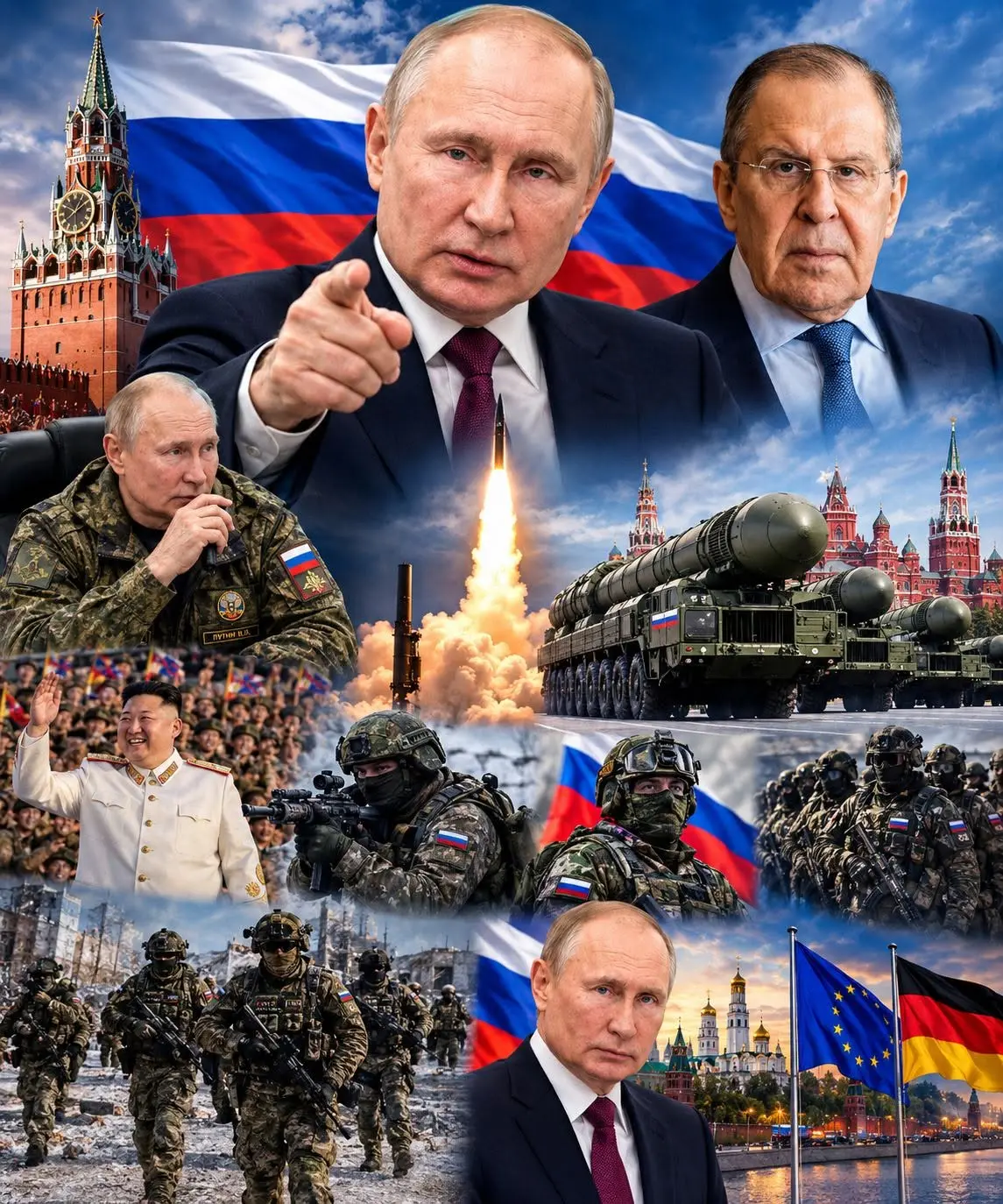


 LAVROV WARNS GERMANY: “DON’T PUSH RUSSIA TOWARD A REAL WAR”
Russian Foreign Minister Sergei Lavrov has accused Germany of moving toward a direct confrontation with Russia, saying Berlin’s response to the Leipzig drone incident could mark the “start of a real war.”
 Germany says Russia was responsible for the incident; Moscow rejects the accusation as baseless. The dispute has already triggered retaliatory diplomatic measures from both sides.

 Moscow’s message: Russia will not be intimidated, but direct war between major powers would carry enormous consequences.
#Russia #Germany #Lavrov #Putin #NATO #Geopolitics #RussiaNews #GlobalAffairs #BreakingNews