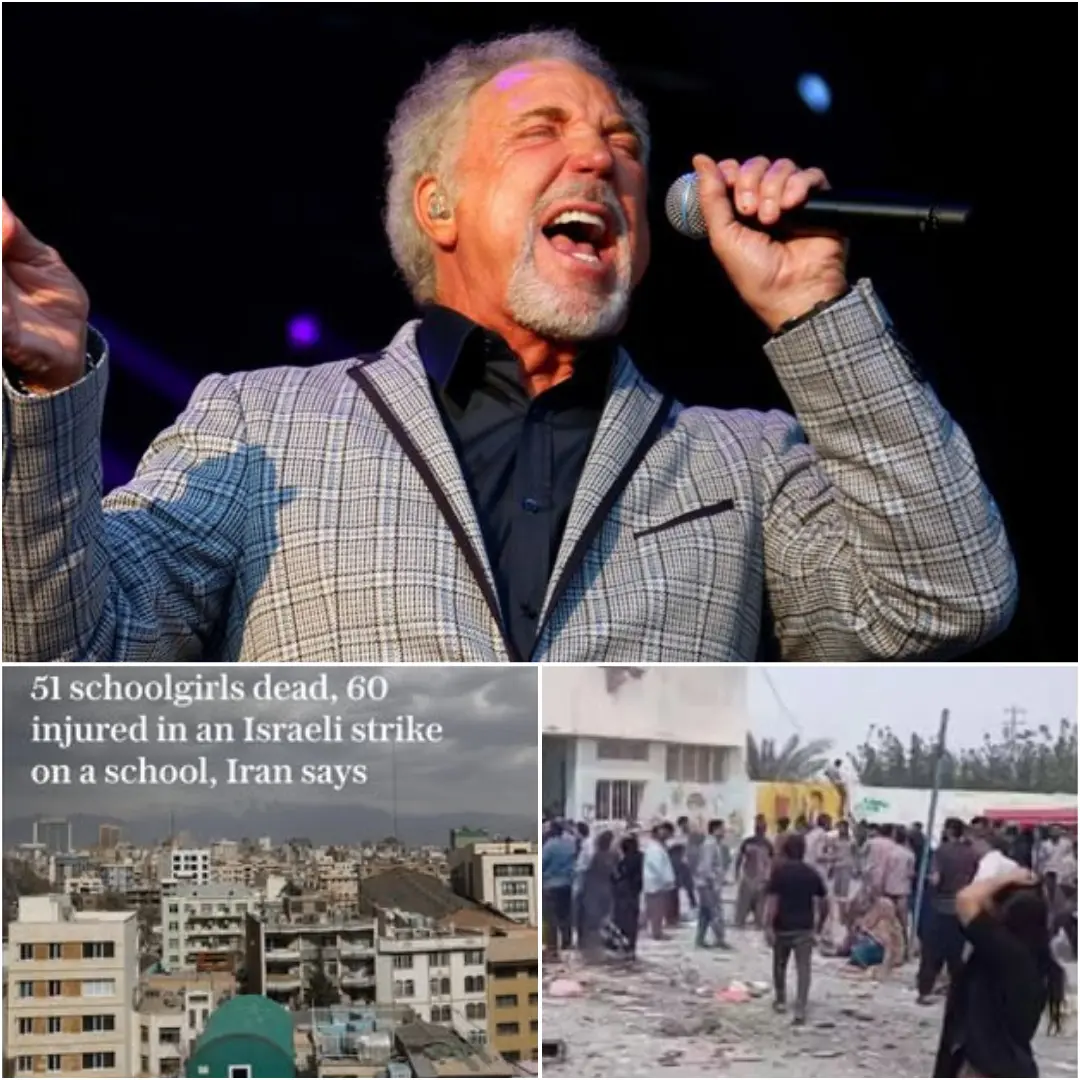

In a moment that stunned both the music world and humanitarian circles alike, Welsh music icon Tom Jones announced that he has donated his entire $5 million in recent career bonuses and sponsorship earnings to fund emergency relief and medical aid following the tragic elementary school strike in southern Iran. The donation, confirmed during an emotional press conference, marks one of the most significant personal financial contributions of his decades-long career and signals a powerful statement about the responsibility public figures can carry in times of crisis.
Jones, whose unmistakable voice has echoed across generations, appeared visibly moved as he addressed reporters. Gone was the flamboyant stage persona that has defined so much of his public life. In its place stood a solemn figure grappling with the weight of images and reports that have circulated globally in recent days. “I’ve seen the reports of those innocent children in the south,” he said quietly, pausing before continuing. “And I promised myself that if I ever had the chance to help those caught in the crossfire of this war, I’d step up. No child should have to face that kind of tragedy, and no family should have to mourn such a loss alone.”
The strike on the elementary school, which occurred amid escalating tensions in the region, has drawn international condemnation and renewed urgent calls for humanitarian access. Aid organizations on the ground have described overwhelmed medical facilities, shortages of critical supplies, and families displaced with little more than the clothes they were wearing. It was within this context that Jones made his decision — one he described not as an act of generosity, but as a moral obligation.
According to representatives from his management team, the $5 million will be distributed through a coalition of internationally recognized humanitarian organizations working to provide emergency surgery, trauma counseling, temporary shelter, and long-term rehabilitation services for survivors. A significant portion of the funds is earmarked specifically for pediatric medical care, including mobile trauma units and the procurement of essential medicines that have become scarce due to the intensifying conflict.
Sources close to the singer revealed that the decision came after several days of private discussions with advisors and relief experts. Jones reportedly requested detailed briefings about the situation on the ground before finalizing the donation. “He didn’t want it to be symbolic,” one associate said. “He wanted it to be effective.”
For many fans, the announcement represents a natural extension of a career that has often balanced showmanship with sincerity. Over the years, Jones has quietly supported a range of charitable causes, from health research initiatives to youth music programs. Yet those contributions, while meaningful, were rarely accompanied by the kind of public declaration seen this week. This time, the scale of the tragedy and the vulnerability of the victims appear to have struck a particularly deep chord.
Humanitarian leaders have welcomed the donation, noting that high-profile acts of support can serve both practical and symbolic purposes. Financially, $5 million can make a measurable difference in emergency response operations. It can fund surgical teams, provide months of trauma counseling, and secure clean water systems in displaced communities. Symbolically, it can draw sustained global attention to a crisis that risks being overshadowed by political maneuvering and news fatigue.
At the press conference, Jones emphasized that his involvement was not intended to take attention away from the victims themselves. “This isn’t about me,” he said firmly. “It’s about those families who woke up one morning and had their world shattered. If my name helps keep the focus on them, then that’s what matters.”
Observers have noted that celebrity philanthropy in conflict zones can sometimes be met with skepticism, particularly when political sensitivities run high. Yet early reactions to Jones’ announcement have been largely supportive. Social media platforms quickly filled with messages from fans praising his compassion and urging others to contribute to relief efforts. Fellow artists and public figures also voiced admiration, describing the move as “deeply human” and “profoundly necessary.”
Beyond the immediate financial impact, analysts suggest that such gestures can encourage broader cultural engagement with humanitarian crises. When artists of Jones’ stature speak openly about suffering beyond their own borders, they can help reframe distant events as shared human concerns rather than abstract geopolitical headlines. In that sense, his words at the podium may carry as much influence as the funds themselves.
Still, Jones appeared cautious about being portrayed as a hero. He repeatedly redirected praise toward medical workers and aid volunteers risking their lives in the region. “They’re the brave ones,” he said. “They’re the ones showing up every day. I’m just doing what I can from where I stand.”
As details of the initiative continue to emerge, organizers have indicated that transparency will be a central priority. Periodic updates are expected to outline how the funds are allocated and what tangible outcomes are achieved. Such accountability measures, experts note, are increasingly important in maintaining public trust around large-scale charitable giving.
The broader context of the conflict in southern Iran remains complex and volatile. Ceasefire negotiations have faltered, and humanitarian corridors have proven fragile. Against this backdrop, private donations cannot resolve the underlying political tensions. What they can do, however, is mitigate suffering in the immediate term and send a message that civilian lives — especially those of children — must remain at the forefront of international concern.

For Jones, now in the later chapters of an extraordinary career, the decision seems rooted in reflection as much as reaction. Having spent decades commanding arenas and selling millions of records, he now speaks openly about legacy in different terms. “Awards and applause fade,” he remarked during the press event. “But helping someone through their darkest hour — that stays.”
Fans who have followed his journey from the early days of chart-topping hits to his enduring status as a global performer say this moment encapsulates a side of him long understood but rarely spotlighted. Behind the powerhouse vocals and charismatic presence, they argue, has always been a deeply empathetic individual shaped by humble beginnings and a strong sense of community.
Whether the donation will inspire additional high-profile contributions remains to be seen. What is clear is that it has already injected renewed urgency into conversations about civilian protection and humanitarian response. Advocacy groups report a noticeable uptick in inquiries and smaller donations since the announcement, suggesting that Jones’ gesture may indeed have a ripple effect.
As the press conference concluded, there were no grand flourishes, no dramatic exits. Jones simply thanked the journalists, expressed hope for peace, and stepped away from the microphones. The cameras captured a final image of a man whose voice has filled stadiums, now choosing to use it in service of something far quieter but no less powerful.
In a world where headlines often move at dizzying speed, the story of this donation stands as a reminder that influence can be channeled toward compassion. While the tragedy in southern Iran continues to unfold, families grappling with unimaginable loss may soon receive tangible support funded by an artist who decided that silence was not an option.


 el, late nights, and the physical strain of live performance are challenges few truly understand. For decades, Jones powered through them with remarkable stamina. Even in his later years, he continued touring and performing with an energy that defied expectations.
 optimistic. There is talk of music playing softly in his home as he rests — fitting for a man whose life has always been intertwined with melody.